Google and your profile
Google Business Profile accounts for about 28% of citations in BrightLocal’s August 2026 study of Google AI Overviews, AI Mode, and ChatGPT in the US, UK, and Australia. Read the study.

DYGILAB · LOCAL VISIBILITY
A restaurant for tonight, a local contractor, a dive center for a vacation: customers also ask Gemini or ChatGPT for advice. These tools draw on information online. Your Google profile plays a role in experiences that use Google and Maps data.
CHANGING HABITS
“A quiet restaurant for a family dinner?” “A nearby auto shop open on Saturday?” People can combine a service, a location, and specific requirements.
of US adults surveyed reported using AI for local recommendations in 2026, compared with 6% in 2025.
BrightLocal, panel of 1,002 US adults.
A CONCRETE EXAMPLE
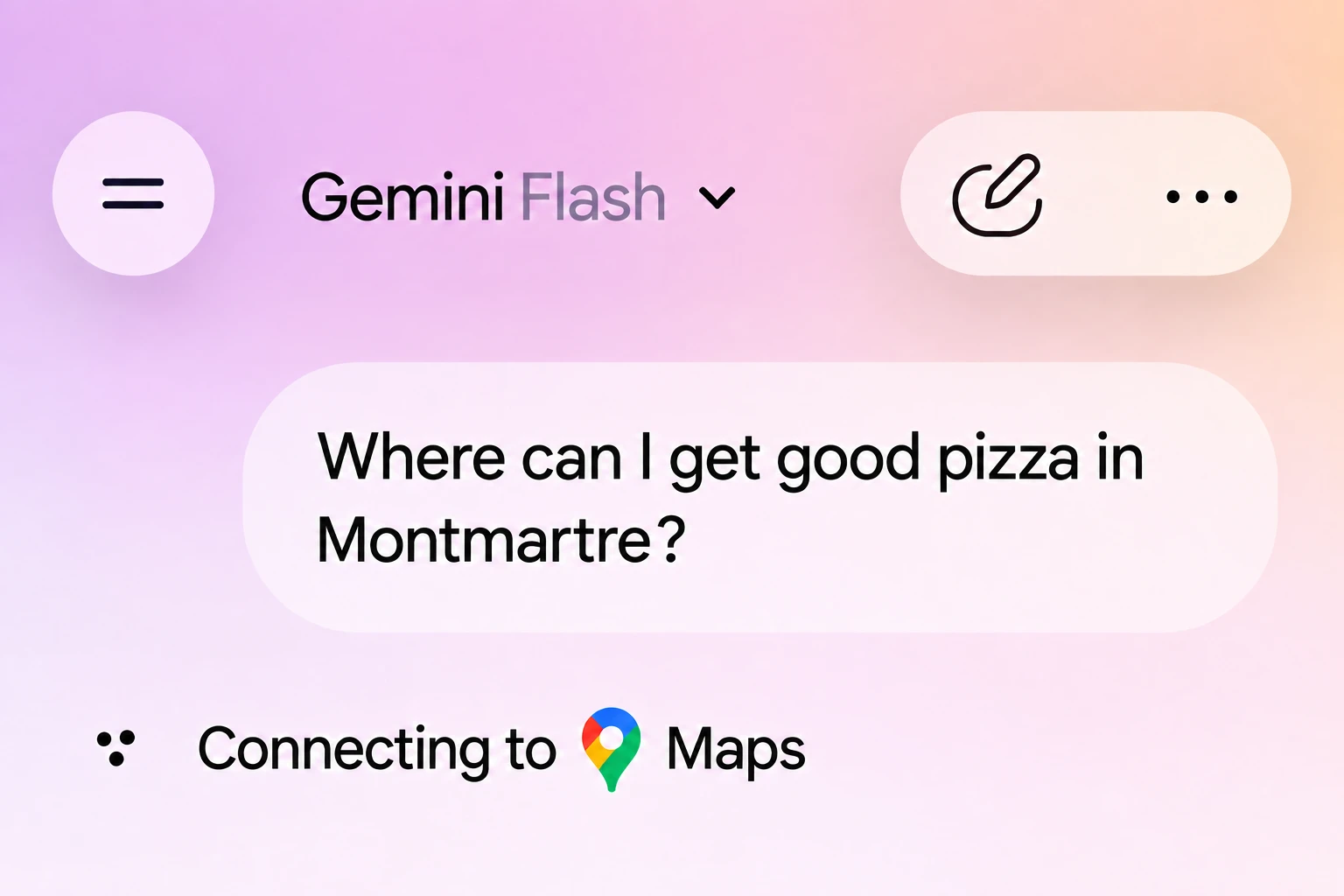
In this example, a search triggers a direct connection from Gemini to Google Maps. The search starts in an AI assistant, but draws on local information here.
Search happens through a conversation: your business information needs to be ready to answer.
YOUR PROFILE’S ROLE
Google Business Profile accounts for about 28% of citations in BrightLocal’s August 2026 study of Google AI Overviews, AI Mode, and ChatGPT in the US, UK, and Australia. Read the study.
Google confirms that Gemini uses public Maps information to find places and provide details such as hours, addresses, and ratings. Available features depend on the usage context. Google documentation ↗.
In this study, ChatGPT relied more on other platforms, including Yelp. Your website and relevant industry sources therefore complement your Google profile. See sources by platform.
If your hours are wrong or your services are unclear, so is the information available about your business. Accurate, consistent details give customers and the tools they use a better starting point.
IN PRACTICE
Illustrative example: someone wants a restaurant open on Sunday, with outdoor seating and vegetarian options. These are useful facts to make accessible, without assuming what an assistant will recommend.
Accurate regular and special hours help people understand when they can visit.
Describe what you actually offer: cuisine, services, facilities, or visitor arrangements, depending on your business.
Your name, address, and contact information should identify the same business on your profile and website.
Your content and supplied photos should reflect the business today, helping customers check whether it suits them.
DYGILAB
Dygilab works on your Google profile: business information, service descriptions, supplied photos, posts, and monthly reporting. This creates a practical foundation for your local presence, including when AI tools draw on that information.
Explore Google profile management ↗
Website work or a broader AI strategy requires a separate scope. An optimized profile does not guarantee a recommendation: each platform selects its own sources and answers.
DYGILAB
Start with the information that describes your business: what you offer, where you operate, and how customers can reach you. We can help you choose the next step.
Let’s talk about your visibility ↗Have another question? Browse all answers by topic.
Explore the full FAQ ↗